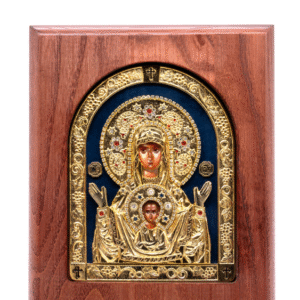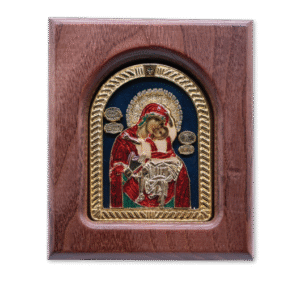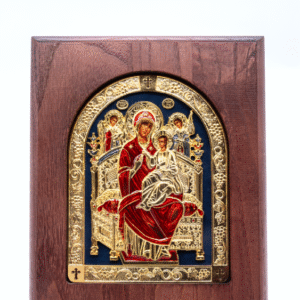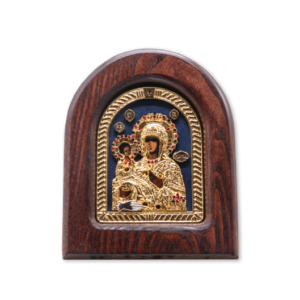
Setting out on their journey and carrying this icon with them, the travelers spent the night on the banks of the Terek River near the city of Mozdok. Throughout the night, a bright light emanated from the holy icon, illuminating the entire surrounding area. In the morning, when the settlers wished to continue their journey, the oxen harnessed to the cart carrying the Iveron Icon could not be moved. One of the travelers had a vision in a dream: the Mother of God commanded that the icon be left in that place. At the end of the 19th century, the inhabitants of Mozdok built a magnificent church in honor of the Iveron Icon of the Mother of God. But it was not only the residents of Mozdok who considered this icon their protectress—she was revered throughout the Caucasus.
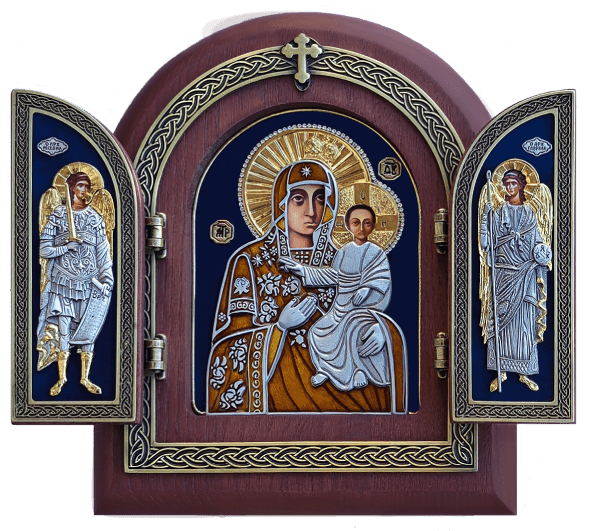
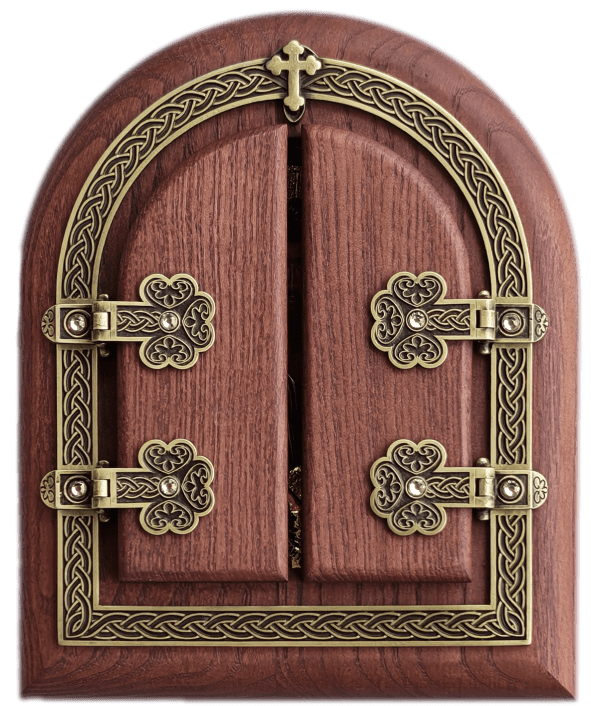
A triptych is a work of art composed of three connected panels, most often painted or carved, which together form a single whole. In Christian art, especially during the Middle Ages, the triptych was used as an altarpiece or as part of an iconostasis. The central panel is usually the largest and depicts the main scene, most often Jesus Christ, the Most Holy Theotokos, or the saints of our Church. The side panels are foldable and typically depict saints, angels, or the Lord and the Theotokos. It is practical for transport, which is why it was popular in the Middle Ages among traveling believers and clergy.